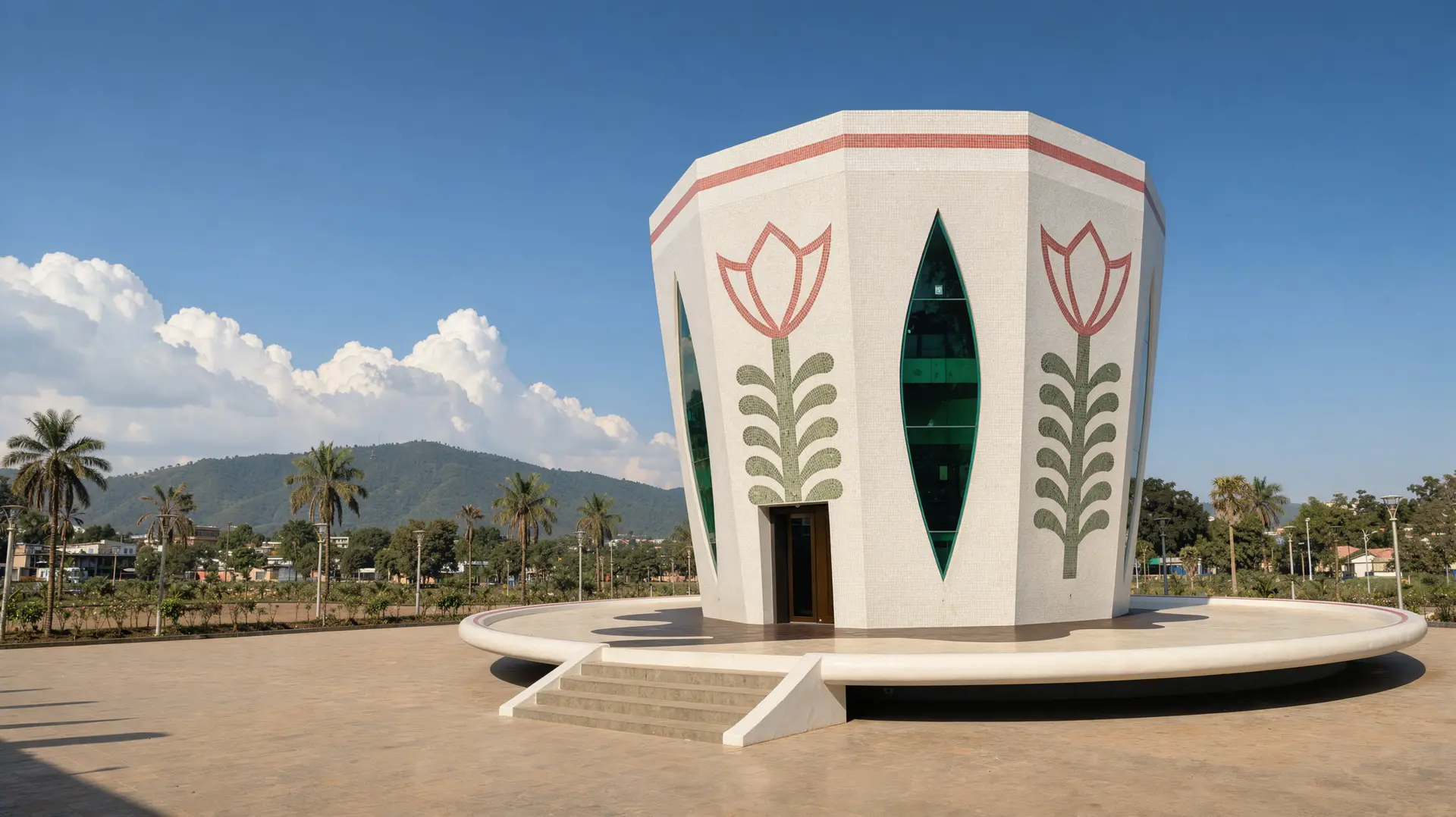
 Hall 01
From farm to cup
Coffee museum · Jimma, Ethiopia
Floor plan
Four halls, one story
Each hall is a stop on the journey our coffee takes. Start anywhere.
- Hall 01
 Hall 02
 Hall 03
 Hall 04
Hall 01 · Origin Where coffee was first found
Interlude · From cherry to cup
One long, slow pour
On the farm
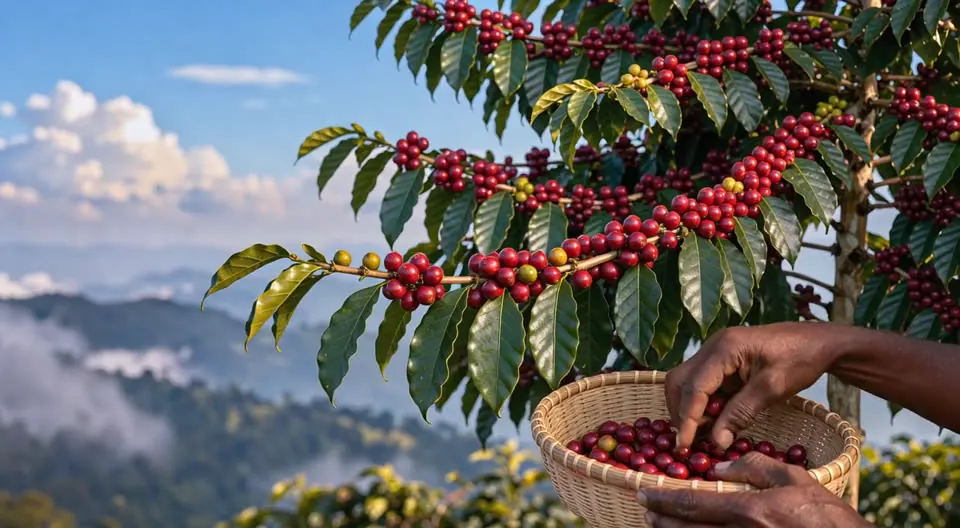
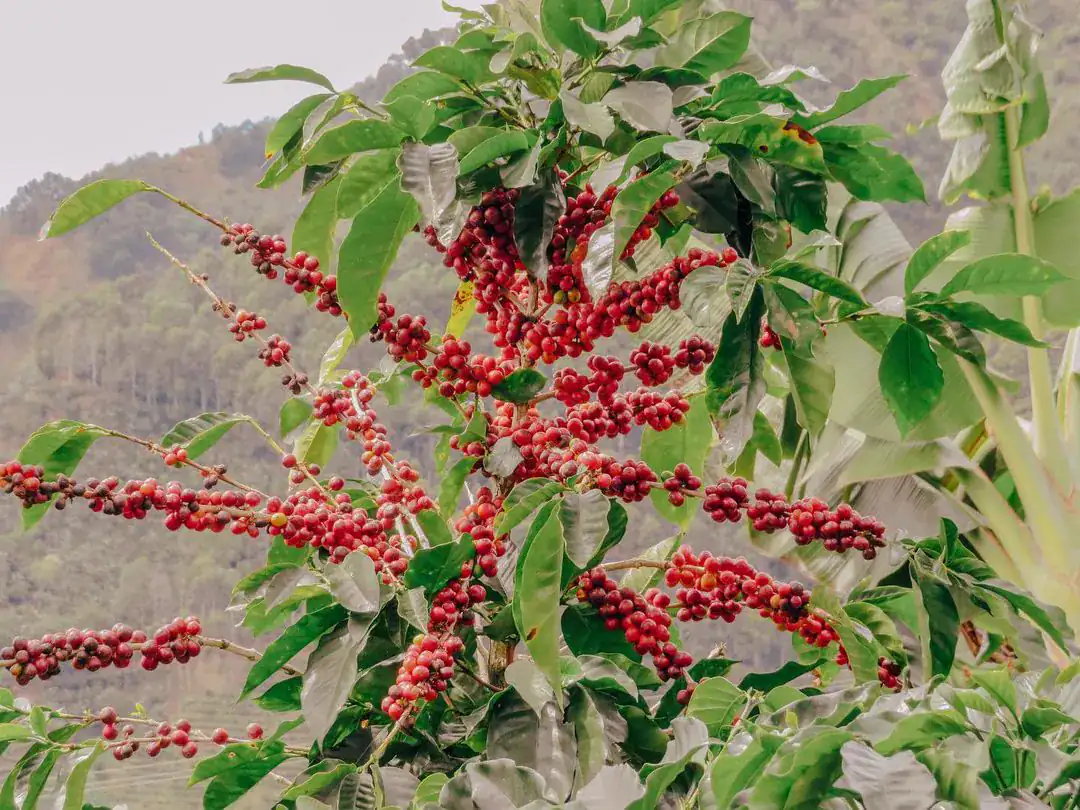
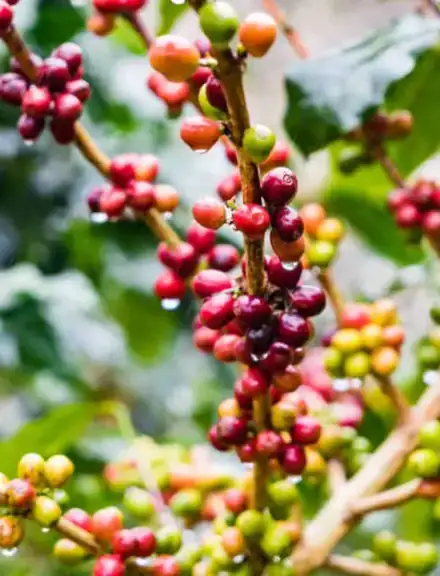
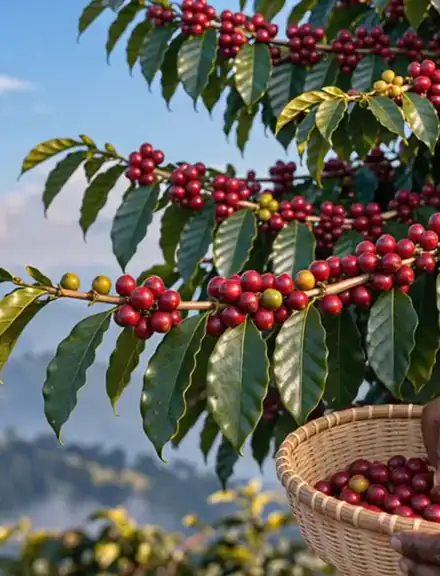
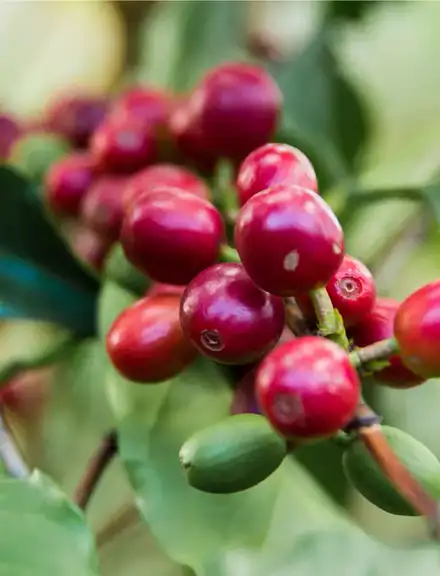
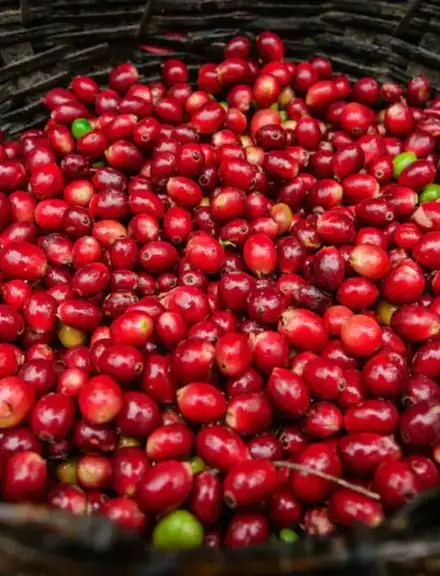
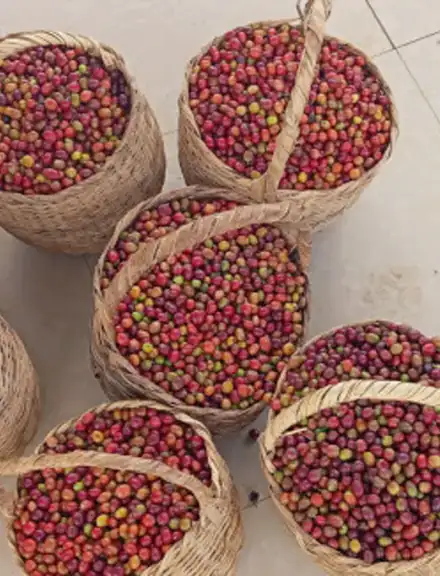
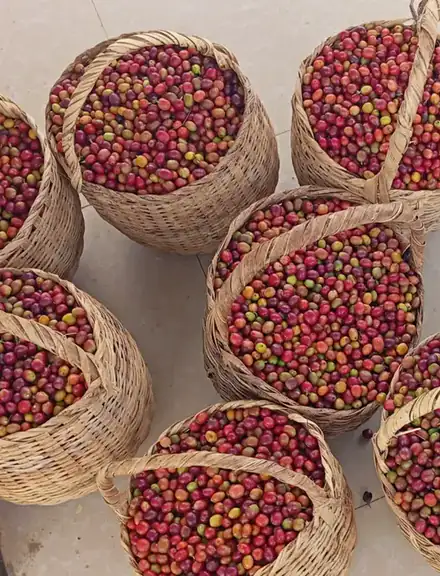
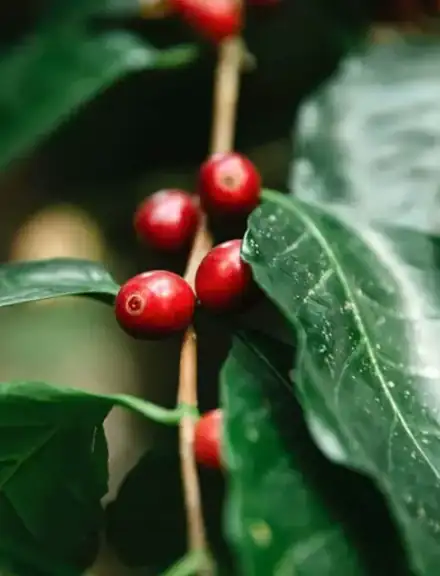
Picked only when red
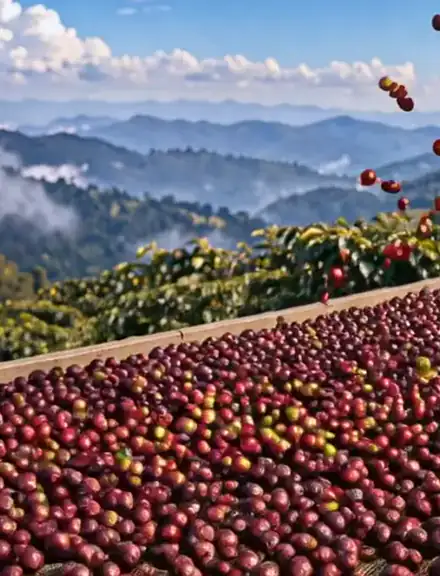
Cherries ripen unevenly, so pickers come back to the same trees again and again, taking only the ripe ones.
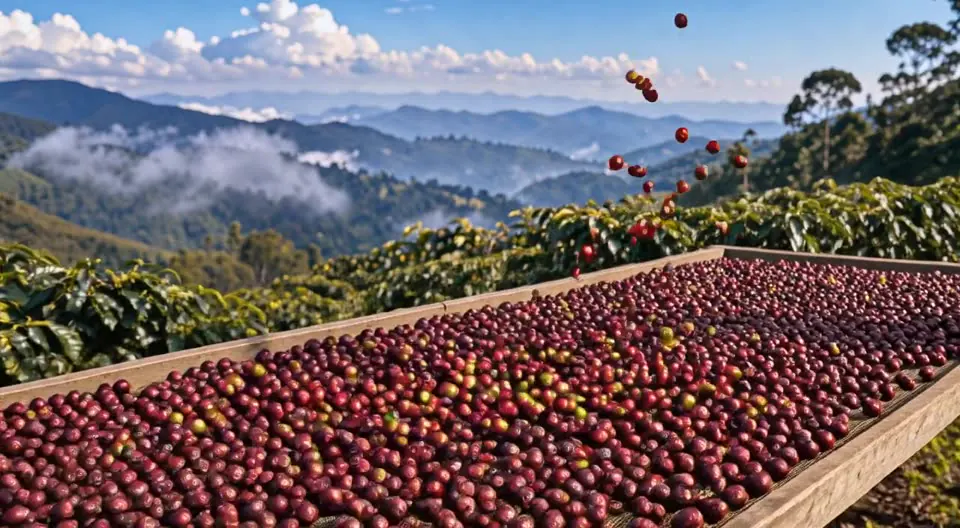
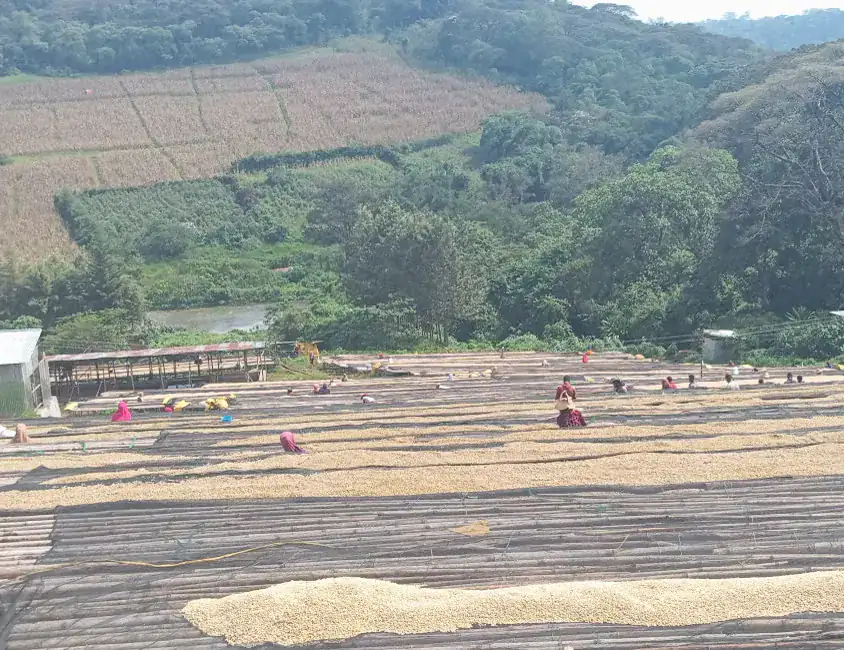
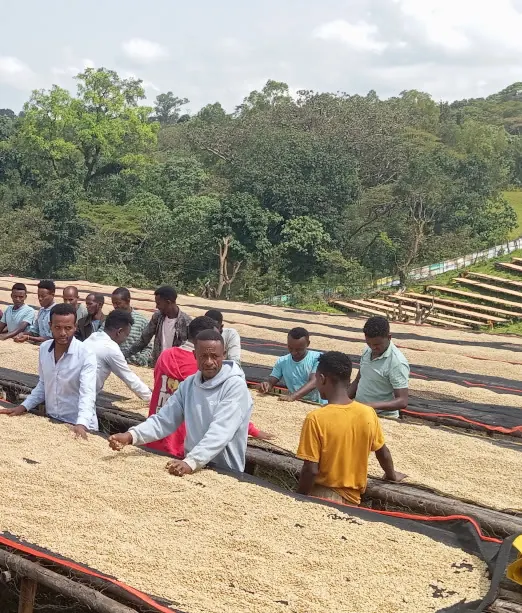
Dried in the sun
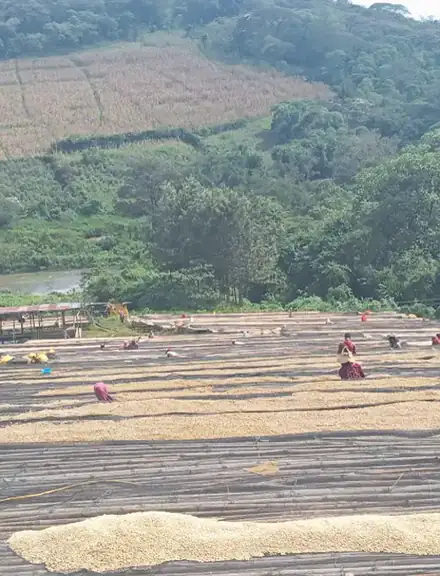
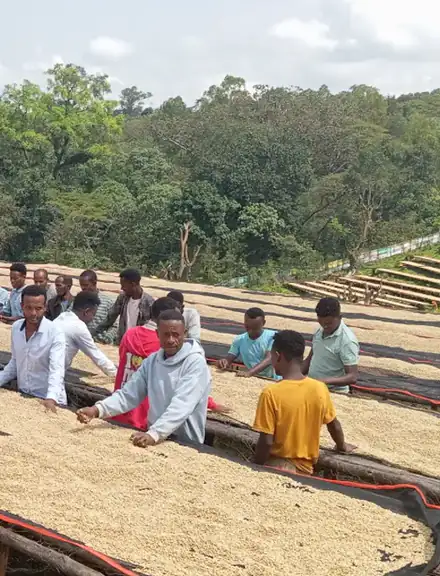
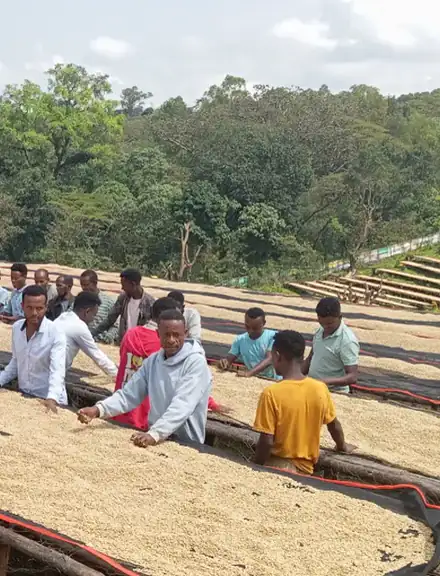
The cherries are spread on raised beds and turned by hand for two to three weeks, until they are dark and dry.
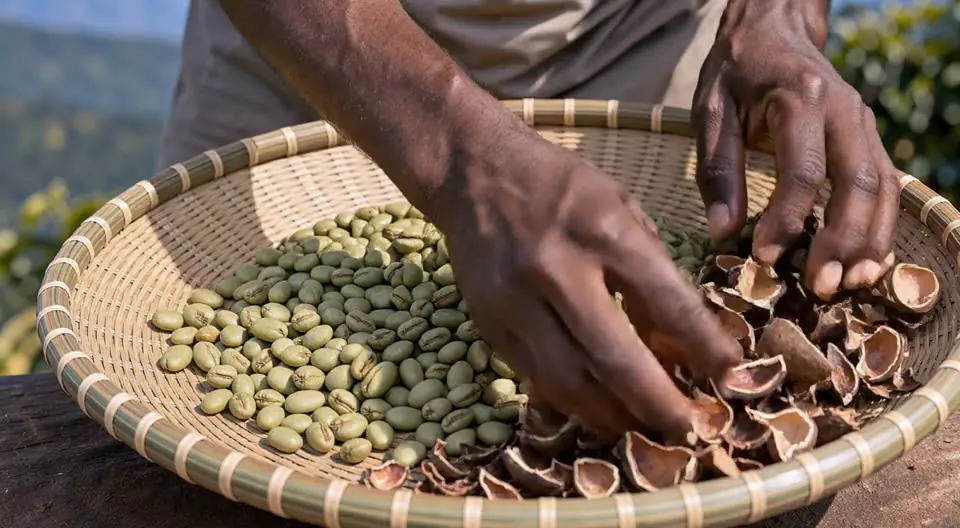
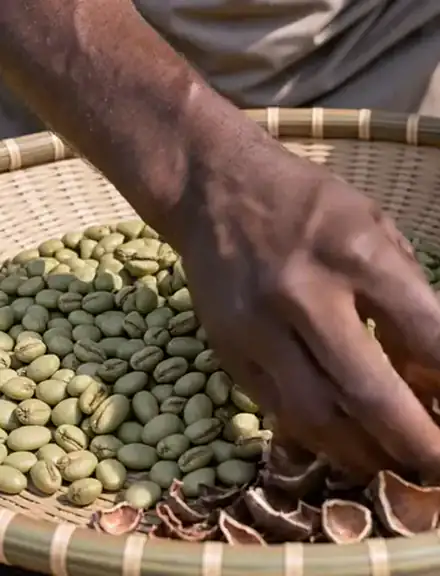
Hulled and sorted by hand
The dry husk comes off to free the green bean inside. Every bean is checked, and the broken ones are set aside.
At the ceremony
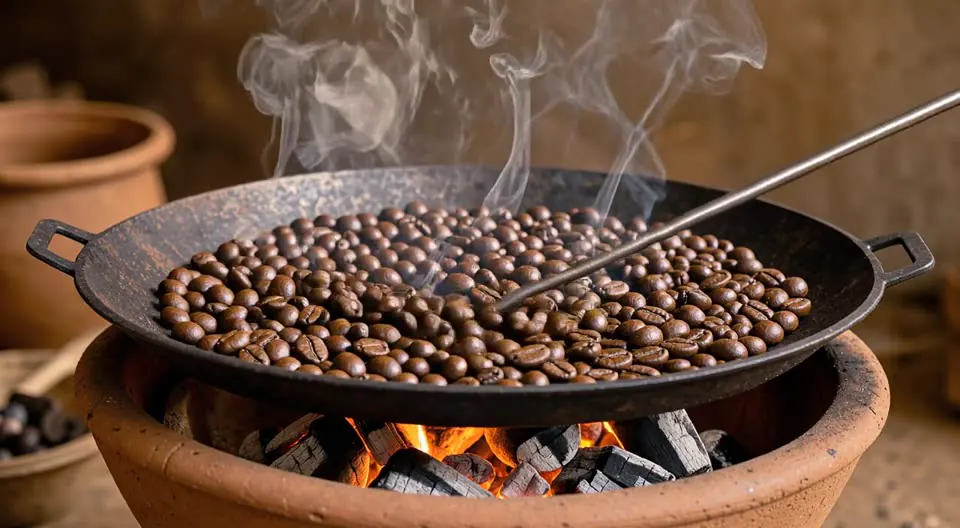
Roasted over charcoal
Green beans crackle in a flat pan over the coals, and the fragrant smoke is carried around the room for the guests.
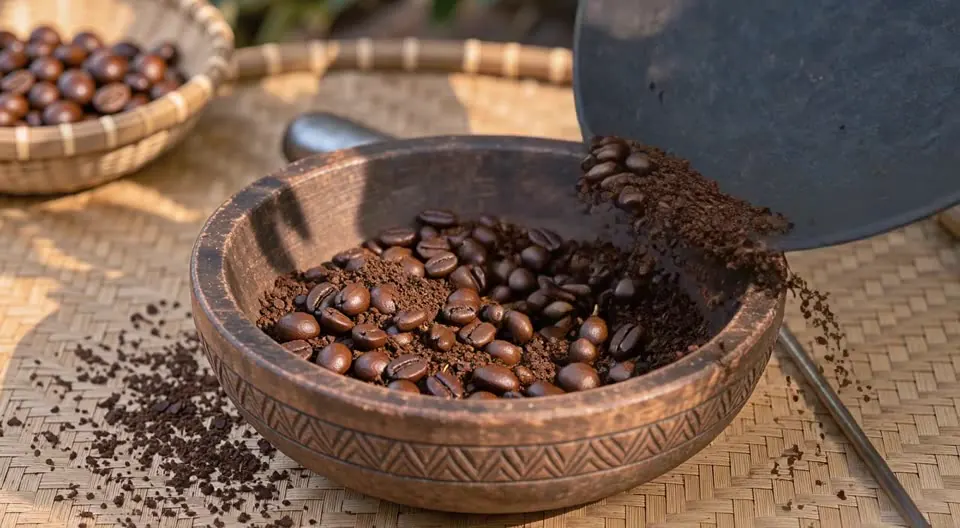
Pounded in the mukecha
The warm beans are crushed in a wooden mortar, just enough for the pot about to be brewed.
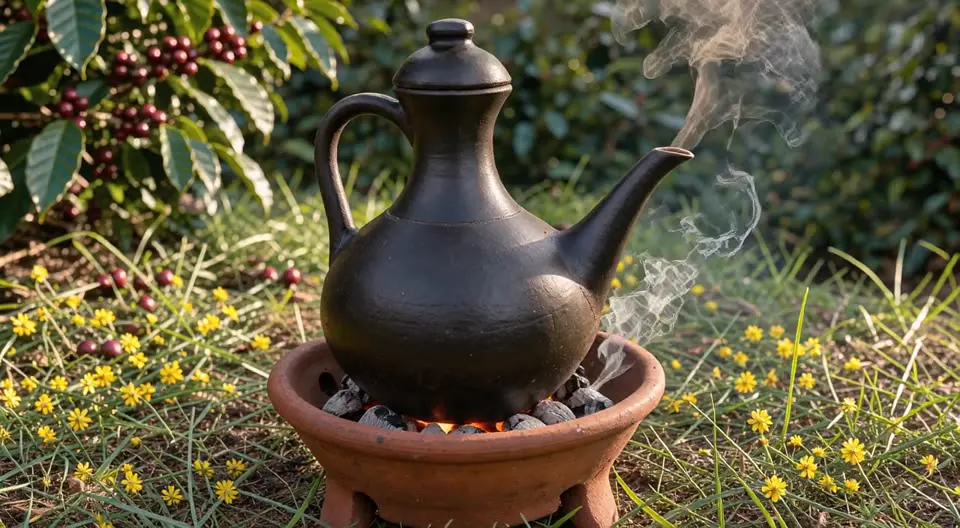
Brewed in the jebena
The grounds go into the clay pot with water and come to the boil over the coals, then rest so they settle.

Poured from a height
The jebena is lifted high and tipped in one thin, steady stream, cup after cup. Abol, then tona, then baraka.
Hall 02 · The farms
Two estates in the Jimma highlands
Rich volcanic soil, generous rain and a temperate climate. We farm both estates organically, and every lot can be traced back to where it grew.
01 / 04 · Estate
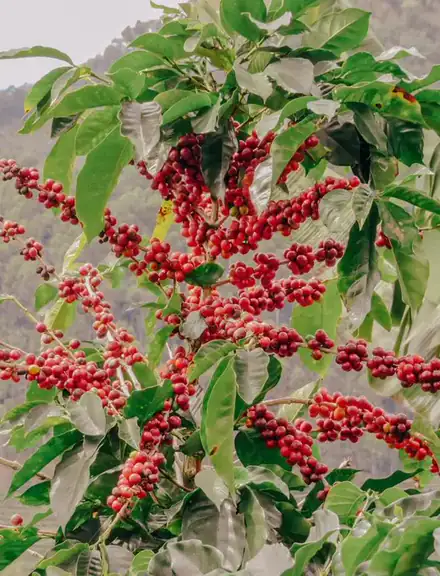
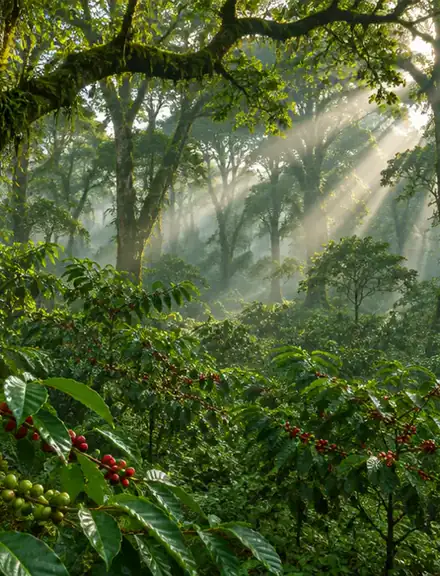
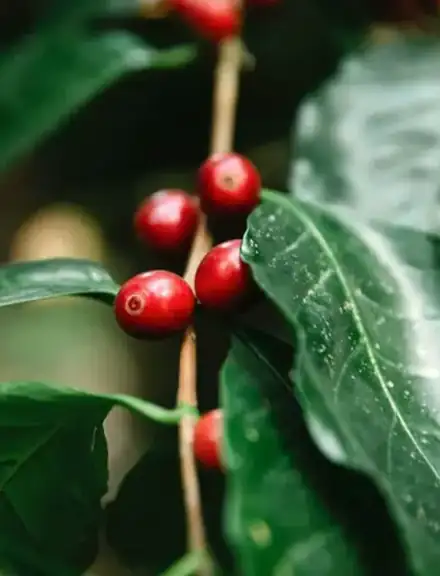
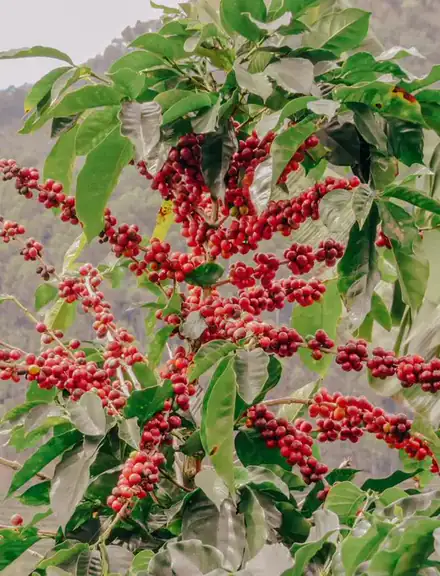
Gera Coffee Farm
An established estate that pairs traditional Ethiopian farming knowledge with modern methods. Known for a rich body, vibrant acidity and complex notes.
01 · Estate
Gera Coffee Farm
An established estate that pairs traditional Ethiopian farming knowledge with modern methods. Known for a rich body, vibrant acidity and complex notes.
02 · Estate
Djimmah Coffee Farm
Every stage is checked here, from planting and harvest to processing and packing. Grown organically, without harmful chemicals.
03 · Washing stations
8 washing stations
Washing stations and collection centres across the Limu, Mana and Goma districts, where cherries are pulped, fermented, washed and dried on raised beds. Three of them are RFA-certified.
04 · Dry mills
4 dry mills
Dried coffee is hulled, sorted by hand and graded here before each lot is bagged and sent to Addis Ababa, traceable to where it grew.
Hall 03 · The collection
The lots on display this season
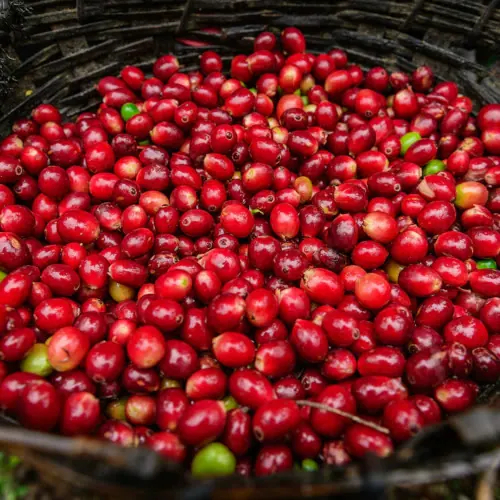
Exhibit 04.1
Unwashed Djimmah
- Origin
- Djimmah (Jimma)
- Process
- Unwashed
- Grade
- 1 to 5
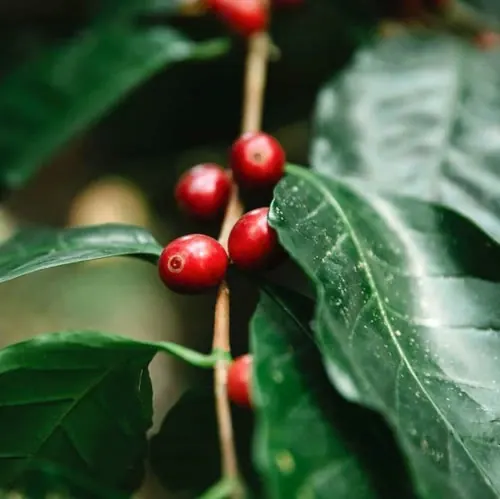
Exhibit 04.2
Washed Limmu
- Origin
- Limu
- Process
- Washed
- Grade
- 1 to 2
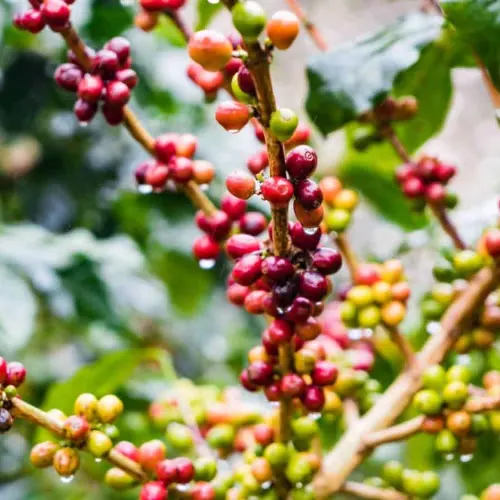
Exhibit 04.3
Washed Gera
- Origin
- Gera
- Process
- Washed
- Grade
- 1 to 2
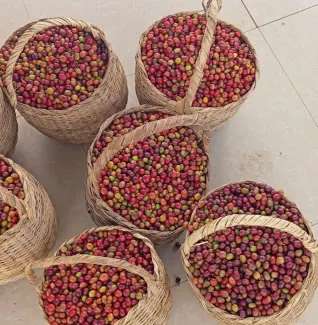
Exhibit 04.4
Unwashed Nekemte
- Origin
- Nekemte
- Process
- Unwashed
- Grade
- 1 to 5
Take it home
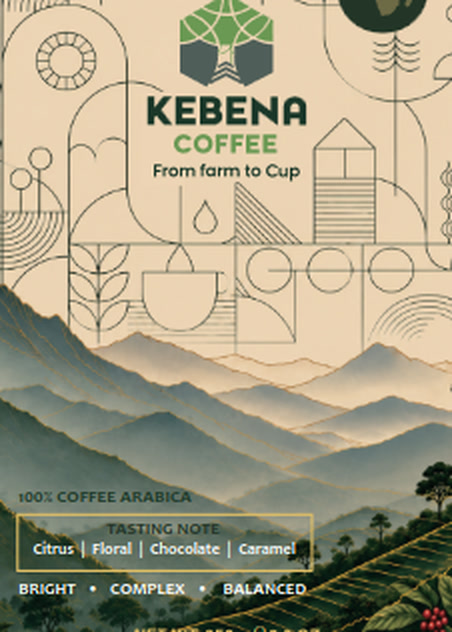
The museum, in a bag.
Everything you have walked through, from the highland farm to the cup. Pick a bag up and turn it round.
Hall 03 · The collection
We also source from these origins
Locations are approximate.
Origin 01 / 08
Jimma
7.67° N, 36.83° E
Home. Our family has grown and traded coffee in the Jimma zone for over three decades.
- Altitude
- 1,400 to 2,100 m
- Harvest
- Oct to Jan
Hall 04 · The people
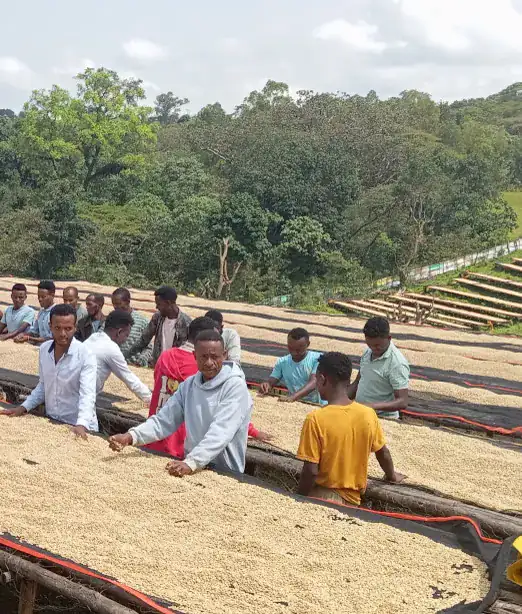
10,000 out-grower farmers bring their cherries to Kebena each harvest.
5,406
RFA-certified farmers
2,000
permanent staff
4,000+
harvest-season workers
We invest in local roads, healthcare and schools. Our operations are certified by RFA and organic standards and follow C.A.F.E. Practices. Through our import arm and our sister company, Care Land General Hospital, we also bring medical equipment to Ethiopia.
Archive
Notes from the field
In Jimma, where coffee began.
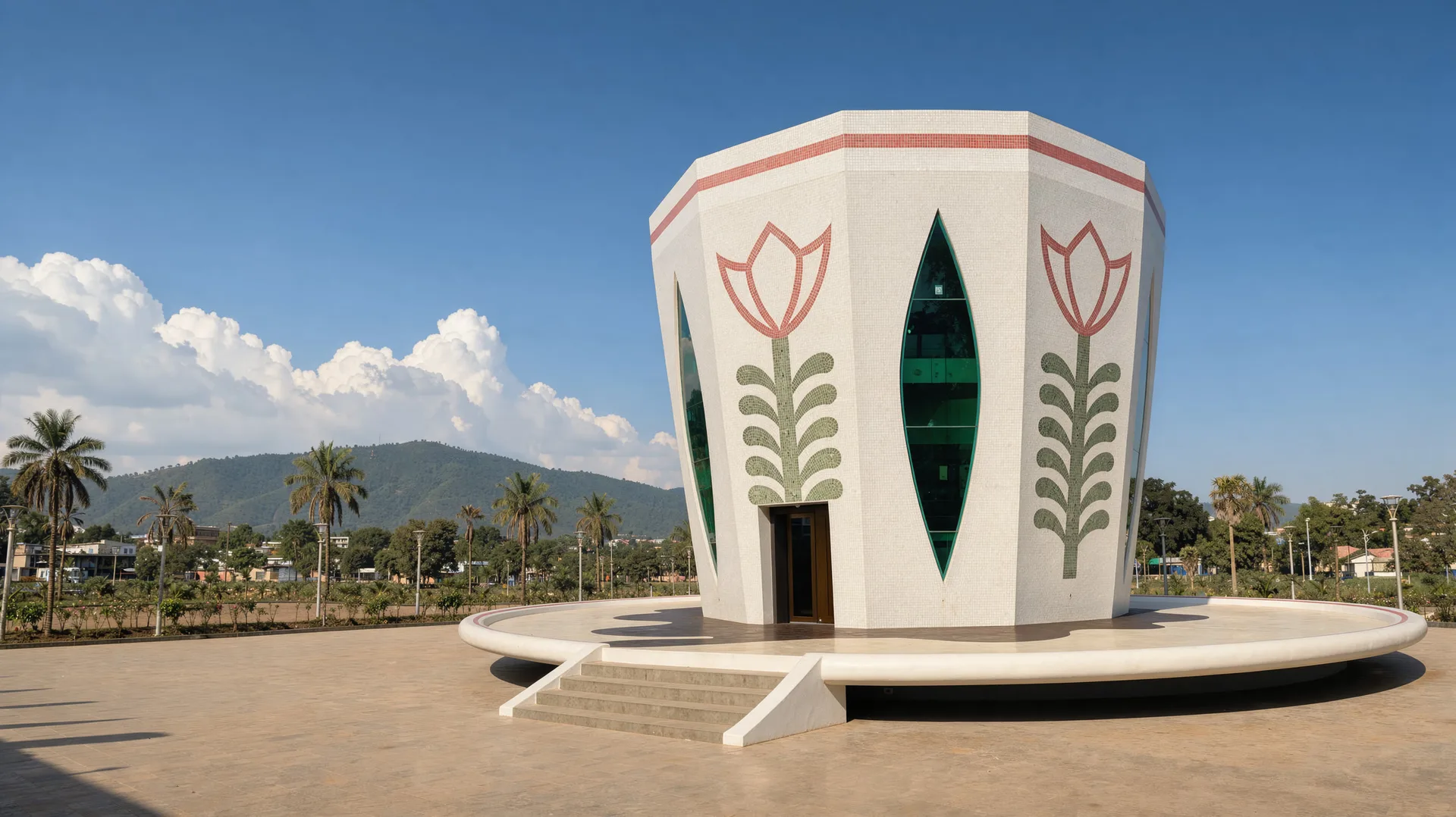
Step inside the coffee cup.
Plan your visit